term · proposed
What is a digital twin?
A computational representation of a real object, place or system, linked to information about its real-world counterpart.
Worked on by Anselm Hook (survey draft), Claude (AI) · first written 15 October 2026 · last changed 3 November 2026
The update interval depends on the application: traffic signals and long-term housing plans operate on different clocks.
A traffic twin, for example, combines a road network with traffic counts, signal timings and vehicle movements. It can help an operator respond to congestion or let a planner experiment with a different junction layout.
This guide is about large-scale systems with public consequences: cities and regions, electricity and water networks, transport and crowds, watersheds and ecosystems.
People define the term in different ways, and the differences matter when reading a vendor's page or a tender. The UK government's definition, above, leans on the link to the real counterpart: a model that is updated from the thing it represents. Esri's page defines it more broadly, as "a virtual representation of reality, including physical objects, processes, and relationships", and presents GIS as the way to assemble one. Others reserve the word for a model fed by live sensors, and call everything else a model or a simulation. This wiki uses "digital twin" as shorthand for all of these: models and simulations of real places, whether or not they are live. The word is also used for models of people, a patient's body or a population's views; those have their own entry, Digital twins of people.
Whatever the definition, a running twin is made of the same four parts, data, an ontology, an engine and a presentation; see The parts of a digital twin.
For the general idea across industries, from aircraft engines and factories to hospitals, Wikipedia's article on the digital twin covers its history, types and uses. This wiki is narrower: models of places, and how to build one.
discussed in
-
Gordon Blair's short 2021 opinion piece asks whether a twin of the natural environment is just a model or just data assimilation, and sets out its building blocks as a "jam sandwich".
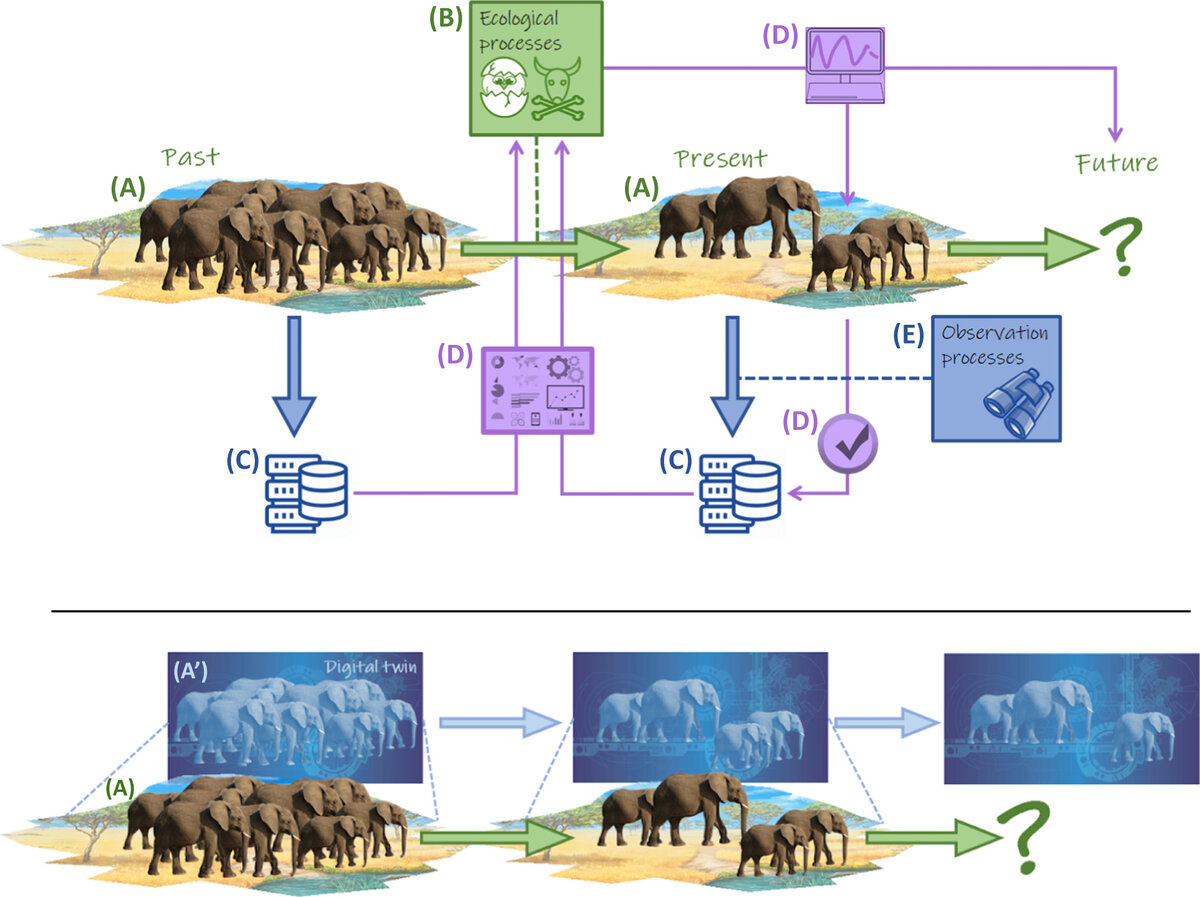
Eight ecologists and modellers set out what twins could do for ecology, five challenges peculiar to living systems, and four common misunderstandings, and urge people to start building prototypes.
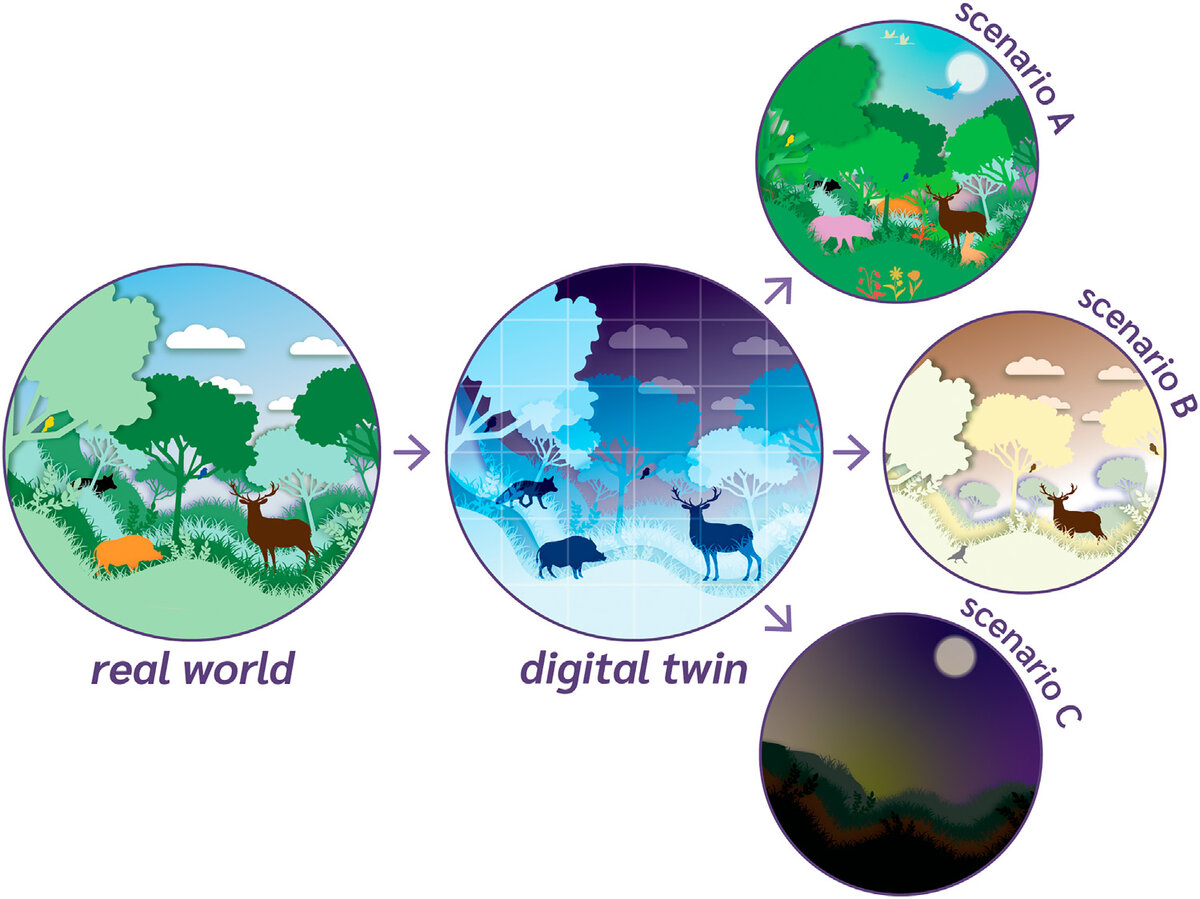
Fourteen Dutch ecologists and computer scientists name the five traits of an ecosystem twin and show how far existing studies are from having them all.
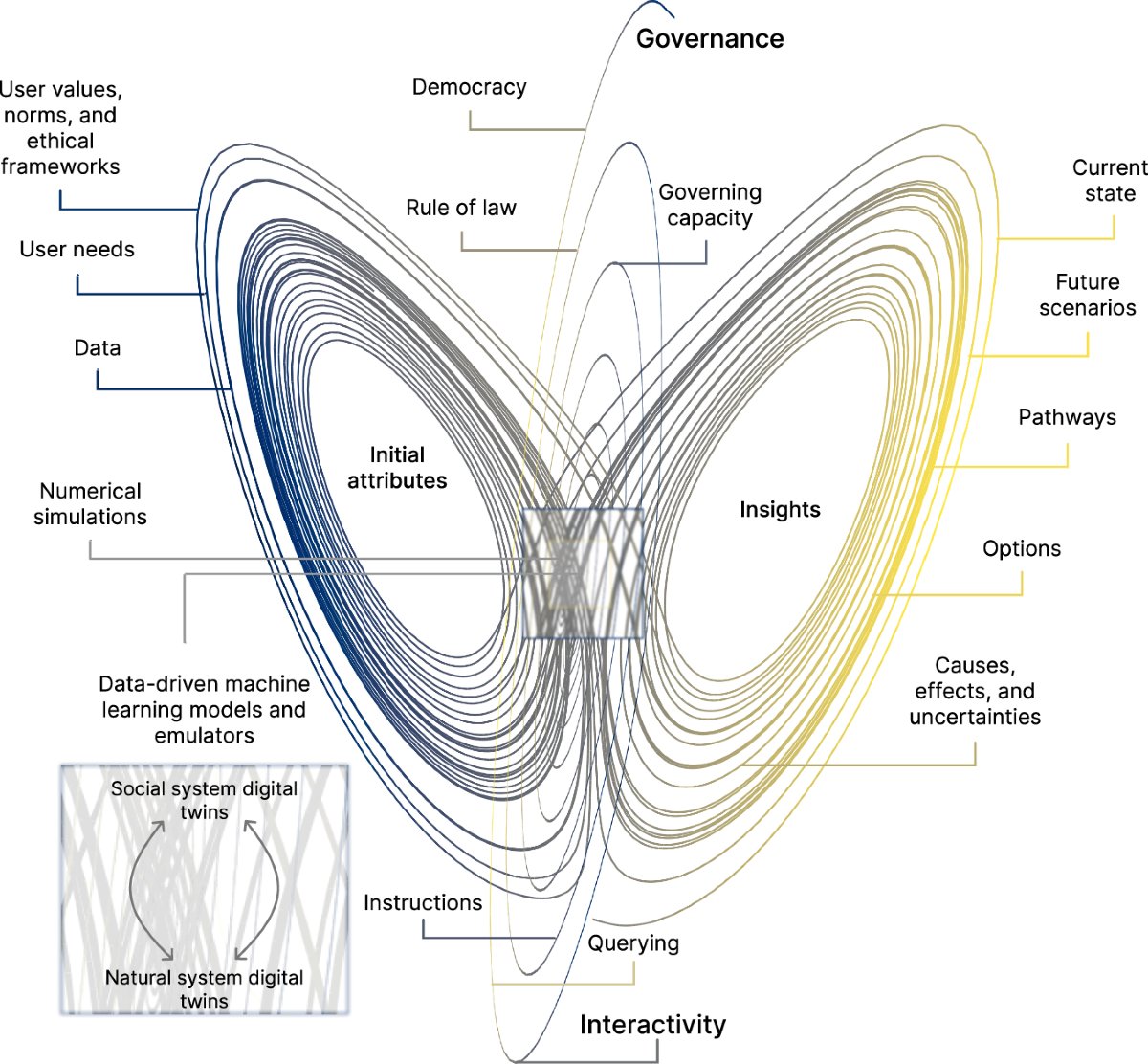
Twenty-eight scientists argue that digital twins of the Earth must model human behaviour and be governed openly by the people who use them.
-
Where the idea and the name came from: Apollo's simulators, Gelernter's Mirror Worlds, Grieves and NASA, and the step from spacecraft and factories to cities and the built environment.
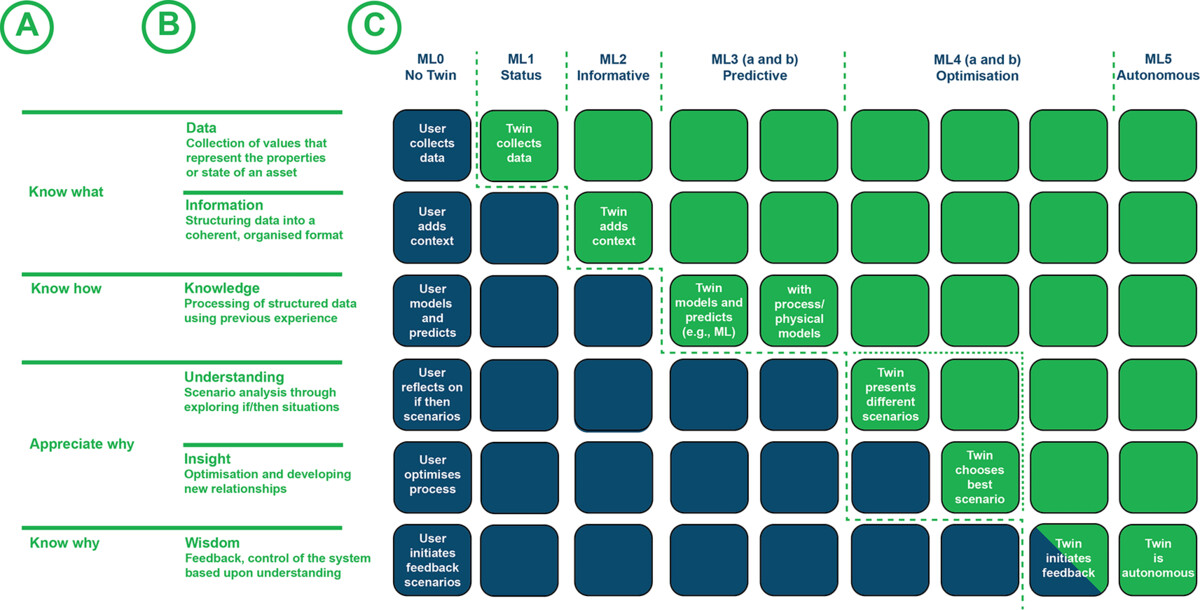
Four Wageningen researchers sort twins into five levels, from one that only reports status to one that acts on its own, so that a project can agree early on which kind it is building.
-
A running model of a place is four things that are built, bought and broken separately: data, an ontology, an engine, and a presentation.