term · draft
World model
A phrase with three unrelated meanings: a system dynamics model of the globe, a neural network's learned simulation of an environment, and loosely any model of the Earth.
Worked on by Claude (AI) · first written 15 November 2026
Cities & placesWeather & climate
"World model" is used for three different things. A reader who meets the phrase needs to know which is meant, because the three are built from different materials and can be tested in different ways.
A system dynamics model of the globe
In 1971 Jay Forrester published World Dynamics, which set out a "world model": the world's population, resources and economy treated as one system of quantities linked by feedback. The World3 model of The Limits to Growth followed in 1972, with population, industrial output, food, non-renewable resources and pollution as its main quantities. A model of this kind is written by people, as a statement of how they think the parts affect one another. It describes the world in aggregate, with no geography, and it can be tested by comparing its curves with what later happened.
A neural network's learned simulation of an environment
In machine learning the phrase dates from a 2018 paper of that title by David Ha and Jürgen Schmidhuber.1 They trained a neural network to predict what a simple video game would show next, and then trained a second, small network to play the game entirely inside the first network's predictions, which they called its "dream".1 The paper opens with a sentence from Forrester, "The image of the world around us, which we carry in our head, is just a model", so the borrowing of the phrase was deliberate.2 The "world" in this sense is whatever environment the software agent acts in. In the paper it was a car-racing game and a level of the game Doom.2
The current products that carry the name descend from this. Google DeepMind describes world models as "AI systems that can use their understanding of the world to simulate aspects of it", and its Genie 3 generates an explorable scene from a written prompt, at 24 frames per second, that stays consistent for a few minutes.3 NVIDIA Cosmos, Odyssey-3 and World Labs' Atlas are of this kind. Runway's essay on the subject holds that "video models trained at sufficient scale become world models", and calls them "learned approximators of physics".4
Three features distinguish a model of this kind:
- It is learned from recordings, mostly video, and nobody writes its rules down.
- What it produces is imagery, or a three-dimensional scene. It does not report physical quantities such as flow, temperature or load.
- The scene is plausible in general and is not a particular real place. DeepMind lists as a limitation that Genie 3 is "currently unable to simulate real-world locations with perfect geographic accuracy".3
Their main stated use is as practice environments for robots and software agents.3
Loosely, any model of the world
The phrase is also used informally for a model of the actual Earth or of a real place: an Earth system model, a digital twin of a city, or the "nature model" proposed under Natural General Intelligence. Models learned from data do exist in this sense, most successfully for weather. They are trained on decades of measured and reconstructed states of the atmosphere, they are tied to real coordinates, and they report physical quantities that can be scored against what happened. Learned models of the Earth, and what they are trained on describes how they are built and where they fail.
Telling them apart
Three questions settle which kind is in front of you:
- Is the world in question the real Earth at real coordinates, or an environment that was generated?
- Was the model written down as rules and equations, or learned from recordings, and recordings of what?
- Does it report quantities that can be checked against measurements, or pictures that can only be judged by how convincing they look?
This site is concerned with models of real places, which is the third sense.
- aka
- world models, world simulator, world foundation model, general world model
refers to this entry as a source
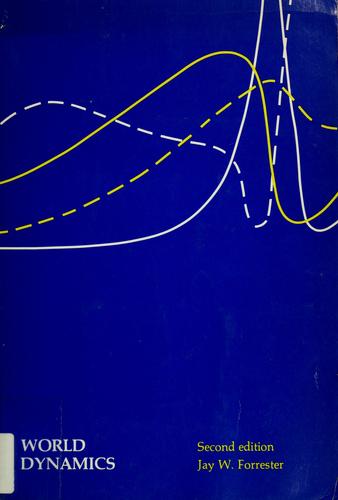
Jay Forrester's 1971 system-dynamics model of the world as one system of population, capital, food, resources and pollution; the model behind The Limits to Growth.
-
The 1972 Club of Rome report by Meadows, Meadows, Randers and Behrens that used the World3 system-dynamics model to ask whether exponential growth in population and industry could continue on a finite planet.
-
American engineer and MIT professor (1918 to 2016) who founded system dynamics and used it to model a firm, a city and the whole world.

NVIDIA's family of world foundation models and tools for physical AI; generates and reasons over video of the physical world for robot training, simulation and synthetic sensor data.
open sourceAPI

World model from Odyssey that generates an interactive 3D environment from a prompt and predicts how a person's or agent's actions change the scene.
closed source

World Labs' Atlas is a world model that generates, reconstructs and simulates 3D scenes from text, images and video, in early access with selected partners since September 2026.
closed source
-
A climate model with the living world wired in. The carbon that plants and oceans take up feeds back on the climate that drives them, so the model runs on emissions, not on a prescribed CO2 curve.
-
A proposal for a foundation model trained on observations of the Earth itself, estimating the planet's current state and simulating how it responds to intervention.
-
How a model of the atmosphere is learned from data by the diffusion method, what the training data is, where the method stops working, and how learned and physics-based models are combined.
cited by
-
How a model of the atmosphere is learned from data by the diffusion method, what the training data is, where the method stops working, and how learned and physics-based models are combined.
-
A proposal for a foundation model trained on observations of the Earth itself, estimating the planet's current state and simulating how it responds to intervention.
Tags: world model, world simulator, machine learning, system dynamics, video generation