Energy
Energy: electricity, grids, power generation, demand, networks.
stories

Water reaches one substation; water pumping and communications can go down with it.

Financial Times game from 2022 in which the reader, as global minister for future generations, makes three rounds of choices to 2050 and sees the warming their path leads to.
data sources
-
California's public climate data platform, funded by the California Energy Commission, serving the 3 km projections behind the State's Fifth Climate Change Assessment.
Weather & climateEnergy open sourceopen dataAPIpartly open participation

A US startup's API and MCP server that answers questions about any US location for AI agents, drawing on federal datasets, county parcel records and a few open sources, with a source on every value.
Cities & placesEnergyWater closed sourcepartly open dataAPIpartly open participation
-
Open global maps from AI2 made by running deep learning models over Sentinel-2 satellite imagery: offshore wind turbines and platforms, onshore wind turbines, solar farms and tree cover.
EnergyLiving systemsCities & places open sourceopen data
Website from the Institute for Progress that charts US energy production, consumption, prices and grid reliability, nationally and for every state, from open government data such as the EIA.
Energy open data
tools
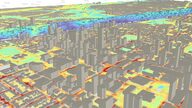
Planète GreenLeaves' software that simulates urban heat, wind, thermal comfort, shading and building energy, run on the company's GPU cloud or on your own workstation or cluster.
Weather & climateEnergyCities & places closed source
-
Facilitated sessions and a role-playing summit from Climate Interactive in which a group proposes climate policies and sees their effect on warming in the En-ROADS simulator as they go.
Weather & climateEnergyPeople & society closed sourcepartly open participation
-
Google's family of geospatial AI models and agents, covering satellite imagery, weather, floods and population, reached through Google Earth, Earth Engine, BigQuery, Maps Platform and Google Cloud.
Cities & placesPeople & societyWeather & climateWaterEnergy partly open sourcepartly open dataAPI

Experimental Gemini-based agent from Google Research that plans a multi-step spatial analysis, calls Earth AI models and geospatial data sources, and returns the result with its plan and sources shown.
Cities & placesPeople & societyWeather & climateEnergy closed sourceAPI
-
Two ways to connect separate simulators into one run: HELICS, an open-source co-simulation framework from US national laboratories, and FMI, the Modelica Association's standard for packaging and exchanging dynamic models.
Energy open source
-

Doyne Farmer's company building agent-based simulations of the economy, firm by firm and household by household, for supply-chain shocks, energy markets and macroeconomic forecasts.
People & societyEnergy closed sourceclosed dataclosed participation
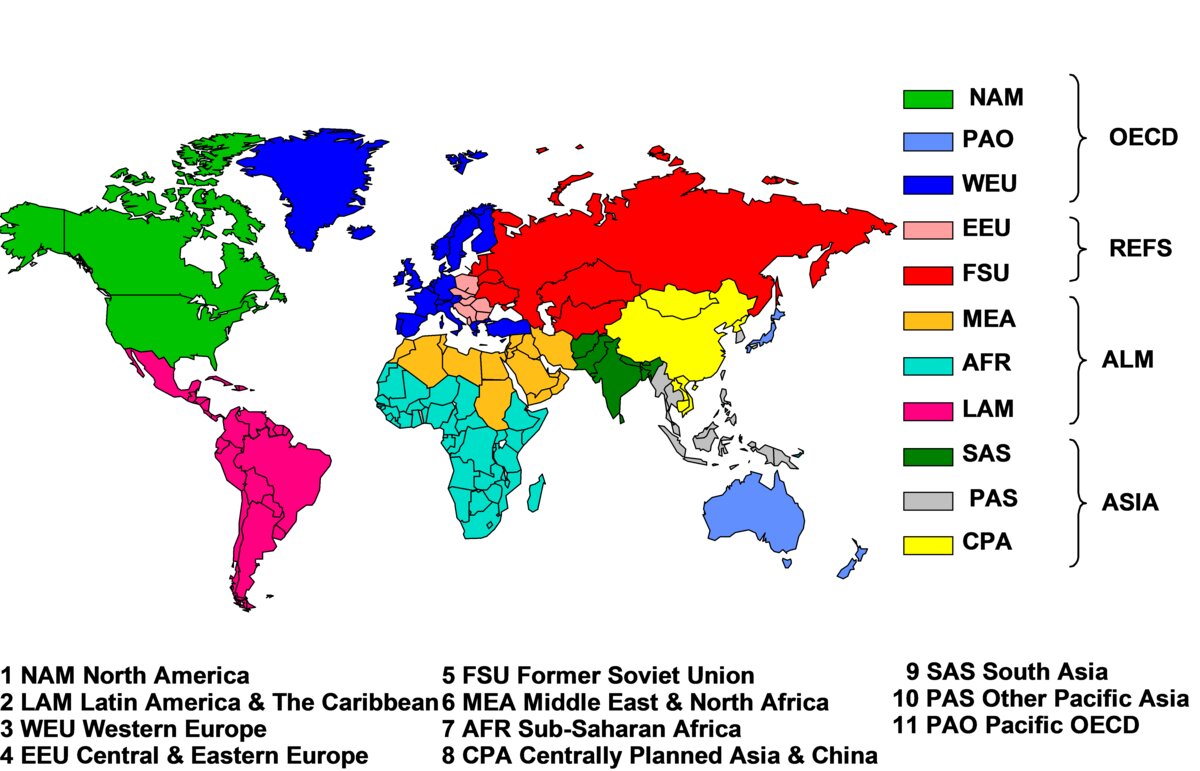
IIASA's open-source Python framework for energy-system optimisation models; its best-known instance is the global MESSAGEix-GLOBIOM model.
EnergyWeather & climate open sourceAPIopen participation
-
Open-source Julia library from SciML for building models from connected components as equations, which it simplifies symbolically and turns into fast simulation code; MIT licence.
Energy open sourceopen dataAPIopen participation

Free interactive web map of world trade that shows bilateral trade flows, tariff rates and tariff history, and ships a day through ten maritime chokepoints, each value shown with its source and reporting date.
Movement & logisticsEnergy closed sourceopen data
-
Commercial single-player game by the solo studio David Made This in which the player builds and runs a high-voltage grid for a growing island town, with a physics-based model of voltage, current, conductor heating and protection.
Energy closed source
-
PyPSA is an open-source Python framework from TU Berlin for optimising power and energy systems; PyPSA-Eur is the open model of the European energy system built on it, covering electricity, transport, heating and industry.
Energy open sourceopen dataopen participation

Open-source lighting simulation from Lawrence Berkeley National Laboratory; uses ray tracing to predict light levels and the appearance of a space before it is built, for daylight and electric light.
Sensory landscapeEnergy open sourcepartly open participation
-
Open-source integrated assessment model from the Potsdam Institute for Climate Impact Research that finds the best paths for the world's economy and energy system under climate targets.
EnergyWeather & climate open sourceclosed datano APIopen participation
-
-
digital twins
-
Helsinki publishes its 3D city models and an energy and climate atlas as open data; the Municipality of Bologna is building a digital twin as civic infrastructure with a public research consortium.
Cities & placesEnergy partly open datapartly open participation
questions
-
As heating, driving and industry move to electricity, where will the network run short, and what mix of wires, storage and generation would close the gap?
mandates
-
Treaty under the UN climate convention, adopted in 2015: hold warming well below 2 °C and aim for 1.5 °C, through national pledges every five years, common reporting and a global stocktake.
organizations
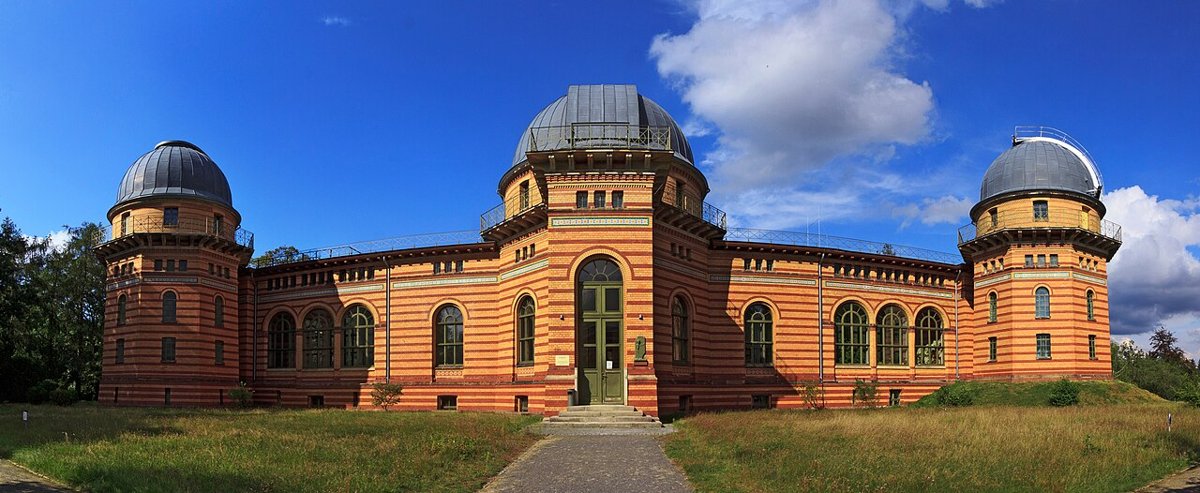
German institute, founded in 1992, that studies climate risks and pathways; it builds the REMIND, MAgPIE, LPJmL and SWIM models and co-founded the ISIMIP impact model comparison.

scenarios
-
Grand Coulee and Chief Joseph dams were built without fish passage and have kept salmon out of the upper Columbia since the 1940s. Tribes on both sides of the border are now releasing salmon above them to test whether runs can come back, and what passage would have to be built.
-
With Hormuz closed, Saudi Arabia moved its oil exports to the Red Sea, and in September 2026 the Houthis seized islands and a port near the Bab el-Mandab strait. Which routes are left for Saudi crude to reach Asia?
-
Since the war with Iran began on 28 February 2026, traffic through the strait that carries about a fifth of the world's oil has fallen to a fraction of normal. Who gets through, how much oil reaches market, and what happens when it reopens?
-
Mowi's Huar Norte salmon site in southern Chile added floating solar and batteries in 2025 to cut the diesel its generator burns, with about 57% of the site's power expected from the sun. How far can that go, here and at other pens with no cable to shore?
-
Since March 2026 foreign-flagged tankers may carry fuel between US ports, a trade the Jones Act normally reserves for US-built, US-crewed ships. How much fuel has it moved, and has it changed prices?
-
The rules for sharing the Colorado River's shortages expired with 2026, and the seven basin states could not agree on new ones. The federal government imposed two-year rules instead, with Lake Powell and Lake Mead at record lows and two states suing. How should the cuts be shared?
-
The United States imports most of its aluminium and taxes it at 50%, while building a new smelter takes years. What does that do to the price American manufacturers pay, and can domestic smelting come back?
articles
-
Twelve recent reports about places, each read for the question someone there would put to a model, and for the kind of model that question needs.
everydays
-
Whether panels on one roof would repay their cost turns on its sun and shade, the panels, the price of power and the rules for selling it back to the grid.
Symbol: "Transmission Tower" by Masha Eizner, Noun Project, CC BY 3.0.