
People & society
People and society: population, health, decisions, public participation.
articles
-
A 70-minute interview on The Generalist with Joon Sung Park of Simile, on simulating real people with language models, from Schelling's model to pricing tests for CVS Health.
-
The Santa Fe Institute's report on its September 2026 working group: why the organisers think the moment has come, what a twin of a cancer patient would need, and why trust and validation will decide whether twins are used.
-
Participatory research approach from a group of mainly CIRAD scientists that builds role-playing games and agent-based models together with the people who use the land or resource.
People & societyCities & placesLiving systemsFood & land open participation
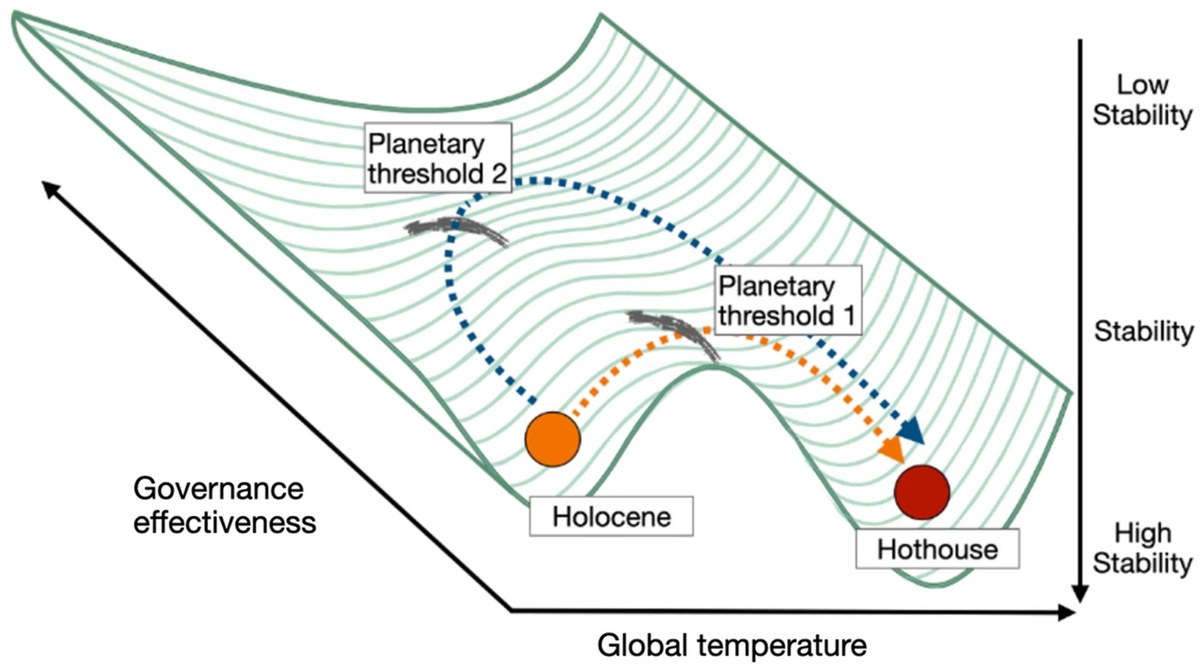
Society added to the Hothouse Earth picture: climate damage can erode the finance, institutions and political will needed to act, and so lower the threshold at which warming feeds itself.
- Distribution-First Population Simulation: Collapse, Calibration, and Recall in Non-WEIRD LLM Persona Modeling article draft
Preprint, July 2026, from Istanbul Technical University: language-model agents grounded on 2,414 real Turkish survey respondents piled onto one default answer instead of the population's spread.
-
A 2026 PNAS paper trains a model on thousands of sudden takeovers in Reddit's r/place to predict the next one and say why. It beats the standard signs of a tipping point, and still misses many.
People & societyLiving systems open sourceopen data
 Emergent Properties of Balinese Water Temple Networks: Coadaptation on a Rugged Fitness Landscape article draft
American Anthropologist paper, 1993: by Lansing's later account, its simulation of 172 subaks on two Bali rivers found shared temple calendars beat maximal planting at balancing water against pests.
-
Essay by Bret Victor, 2011, proposing documents whose reader can change the author's assumptions and see the consequences, with working examples built on his Tangle library.
-
Stanford-led study, 2024, revised 2026: agents built from two-hour interviews with 1,052 Americans predicted their survey answers at 83% of the people's own two-week retest consistency.
People & society open sourcerestricted data
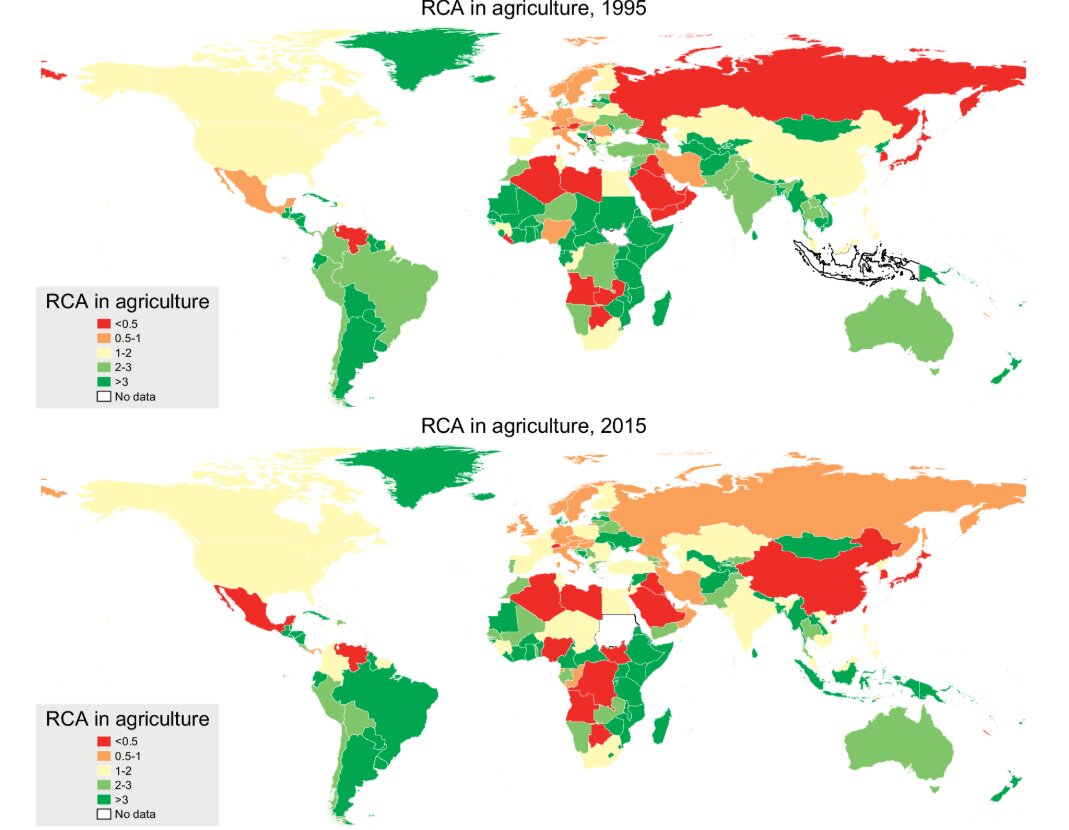
Whether country people turn against trade depends on whether their own region's farming can compete: a study of 384,194 survey answers in 123 countries, European elections and the US after NAFTA.
-
What studies have measured when people are shown a risk: eco-paralysis, fear and efficacy, a flood map that lowered concern, and games played on a climate model.

One long page on how to build a simulation of a real place, written to be loaded whole into a language model. A copy of the guide in the documentation of esimv1.
- Large language models that replace human participants can harmfully misportray and flatten identity groups article draft
Nature Machine Intelligence paper, 2025: across four language models and 3,200 people in 16 identities, a model speaking as a group sounds like outsiders imitating it and gives too narrow a range.
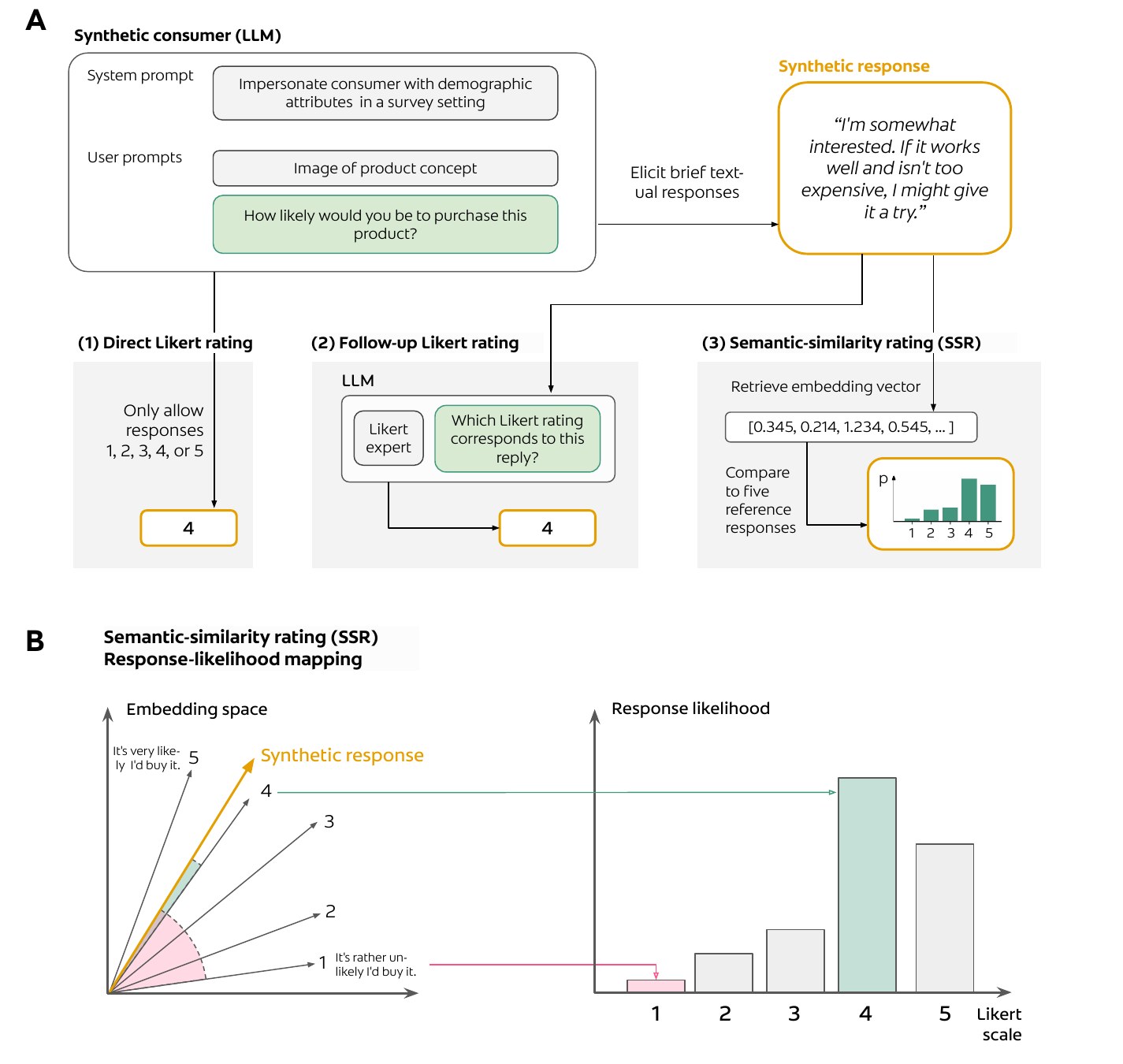 LLMs Reproduce Human Purchase Intent via Semantic Similarity Elicitation of Likert Ratings article draft
2025 preprint: language model personas answer a survey in words, and the words are scored against anchor sentences. Tested against 57 product surveys with 9,300 real answers.
People & society open sourceclosed data
-
Preprint by Guan and others on Light Society, a framework that runs a billion simulated people by having a small trained model stand in for the language model.
-
Political Analysis paper, 2023, from Brigham Young University: GPT-3, given the backgrounds of real US election survey respondents, reproduced the overall pattern of their vote choice and attitudes.
People & society open data
-
Five tests of Google's population dynamics model on health questions, from measles vaccination on the Canadian border to cholera in the Congo: where a summary of each place helps and where not.
-
Warren Weaver's 1948 essay sorting science's problems into simplicity, disorganized complexity and organized complexity, and betting on computers and mixed teams for the last.
- Simulated responses from large language models are weak proxies for human economic preferences across 74 countries article draft
Nature Human Behaviour, October 2026: twelve model setups answered a survey of risk, patience, trust and generosity for 67,201 people in 74 countries, explaining about 1% of individual variation.
People & society open sourceopen data
-
The 2022 Stanford paper that filled an imagined online community with thousands of language-model members, so a designer could see what it might turn into before anyone joined.
-
Models of a population at the level of its people: residents built from the census, run through their days, and given a voice by language models, with what the evidence says about each layer.
-
Political Analysis paper, 2024: ChatGPT personas matched US survey respondents' average feelings toward 11 groups but gave too little spread, wrong regression results and shifting answers.
People & society open data
-
An open atlas that takes 179 simulation games apart into 199 shared mechanics, from needs decay to supply-demand pricing, and maps where AI techniques could change them. By Yohei Nakajima and others.
-
2025 journal paper: GPT-3.5, playing 1,905 respondents to the 2017 German Longitudinal Election Study, matched their reported vote 46% of the time and leaned toward the Greens and the Left.
-
Between 2004 and 2008 map-making passed from GIS specialists to web developers, designers and the public. An account of that change, and of what in it applies to models of places now.
-
ICML 2023 paper that compared nine language models with 1,498 Pew survey questions answered by 60 US demographic groups and found the models' opinions far from the public's.
People & society open data
tools
-
Company that says its simulated populations, grounded in demographic, behavioural and outcome data, let clients test a product, price, message or strategy before committing; it publishes its own accuracy benchmark against published surveys.
People & society closed sourceclosed data
The Amazon Conservation Team and the AARIMO network use Vantor satellite imagery to find and track illegal gold-mining dredges along the Puré River in the Colombian Amazon and pass the findings to enforcement agencies.
Living systemsPeople & society closed source
-
Open-source Python software for activity-based travel models, run by a consortium of US metropolitan planning organisations and other transport agencies; it simulates where each person in a region goes, how and when, over a typical day.
People & societyMovement & logistics open sourceopen participation
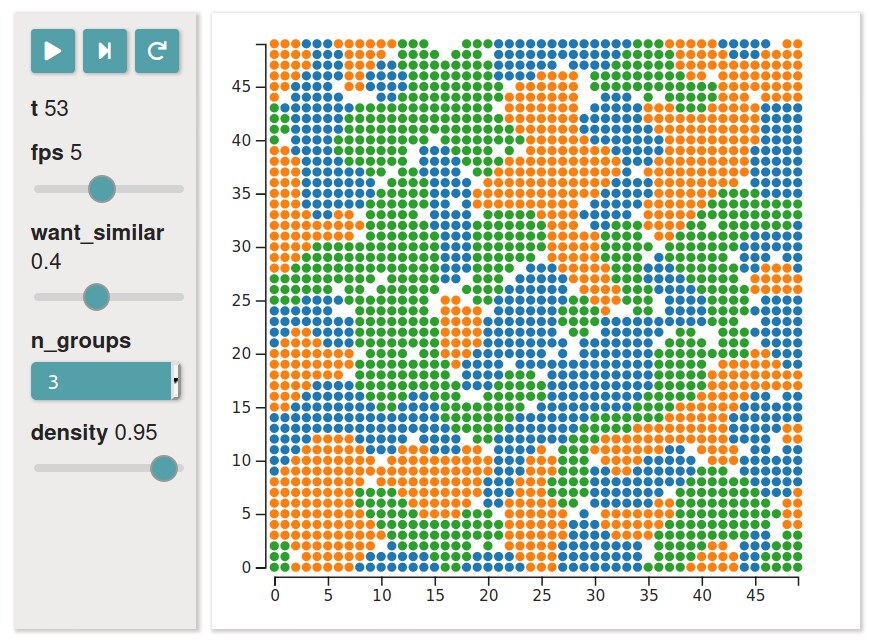
Open-source Python library by Joël Foramitti for building agent-based models and running experiments on them in Jupyter; no longer actively developed, and its authors point new projects to Mesa.
People & society open sourceopen dataAPIopen participation
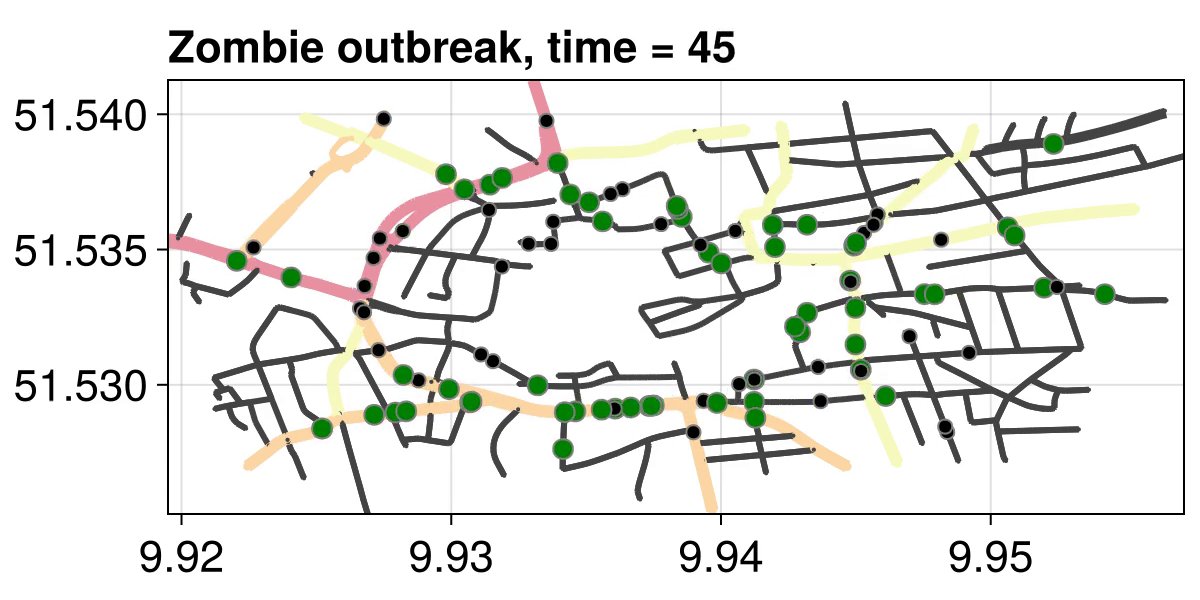
Open-source Julia library from JuliaDynamics for agent-based models, with grids, networks, continuous space and OpenStreetMap road networks, and both step-by-step and event-driven time.
People & societyCities & places open sourceopen dataAPIopen participation
-
Open-source platform from Tsinghua University's FIB Lab for simulating societies of language-model agents; version 1 simulated city life for over 10,000 agents, and version 2 adds AI assistants that design and run the experiments.
People & societyCities & places partly open sourceopen participation
-
A simulated population of more than five million New Zealanders built by PHF Science, the New Zealand Institute for Public Health and Forensic Science, from over 30 government datasets and used to model a measles outbreak.
People & societyCities & places closed sourceclosed dataclosed participation

AnyLogic's simulation software combines agent-based, discrete-event and system-dynamics modelling in one model, with libraries for road traffic, pedestrians and rail and the option to place models on GIS maps.
People & society closed sourceAPI
-
MIT Media Lab's open-source table for planning in a group: people move tagged blocks on a model of a district and simulations of mobility, noise and energy redraw as they do.
People & societyCities & places open sourceAPI

Climate Central's free weekly service of localized climate graphics, data and explainers for TV meteorologists and journalists, localized for more than 245 U.S. cities and media markets.
Weather & climatePeople & society partly open datapartly open participation
-
Climate Central's daily world map scoring, from -5 to +5, how much more or less likely human-caused climate change has made each place's temperature on a given day.
Weather & climatePeople & society partly open dataAPI unknown
-
Open-source Android app from the non-profit Awana Digital for territory monitoring and mapping, co-designed with Indigenous communities; teams record observations on a map and share them peer to peer.
People & societyCities & places open sourcepartly open participation
-
Python library from Google DeepMind for building simulations in which language-model characters act and a "game master", borrowed from tabletop role-playing games, decides what their actions do.
People & society open sourceopen participation
-
Open-source Python agent-based disease models from the Institute for Disease Modeling and partners; Covasim simulated COVID-19 through households, schools and workplaces for policy work in more than a dozen countries, and is now part of the broader Starsim framework.
People & society open sourceopen dataAPIopen participation
-
Open-source Python package from Expected Parrot for running surveys and experiments on language models and simulated respondents with set traits, with tools to send the same survey to real people for comparison.
People & society open sourceAPIopen participation
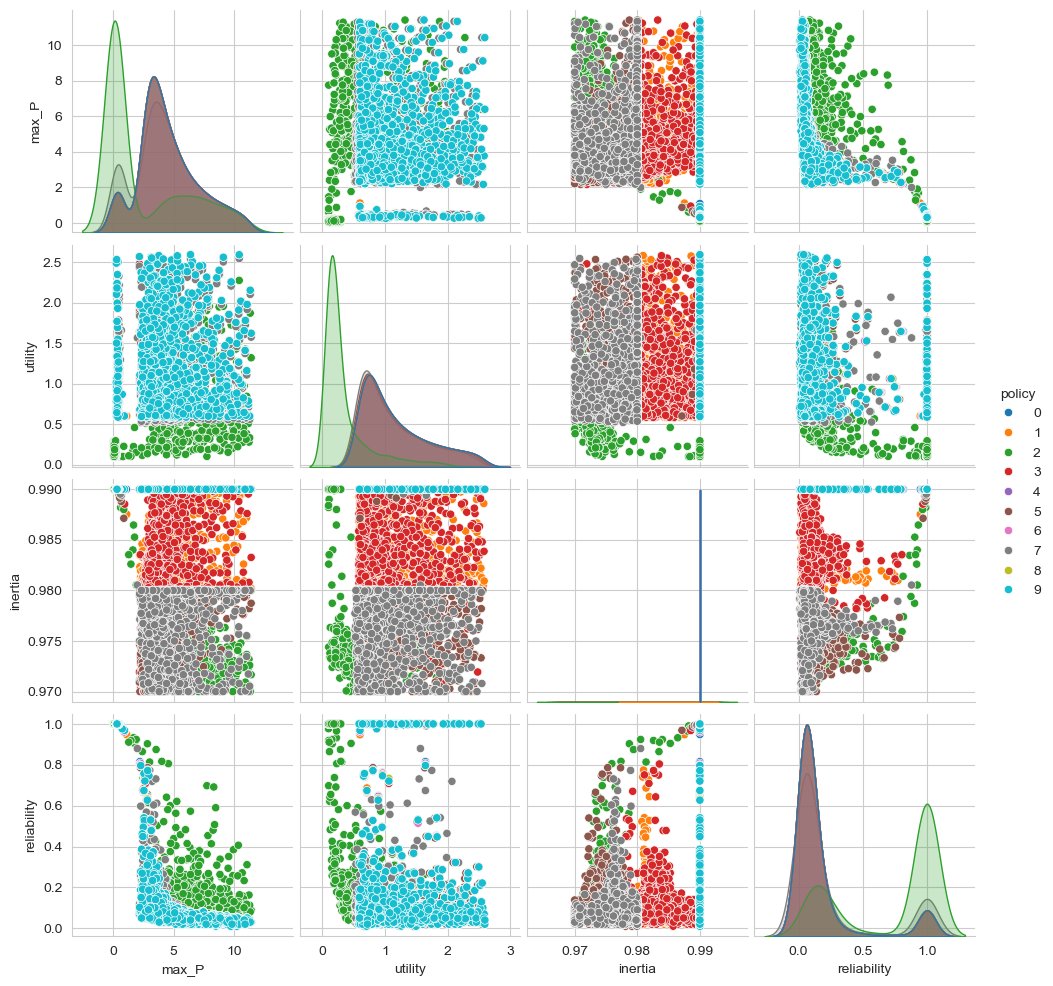
Open-source Python library from TU Delft that runs a model across many combinations of uncertain inputs and policies, then finds which combinations lead to which outcomes.
People & society open sourceopen dataAPIopen participation
-
Climate Interactive's global climate simulator, built with MIT Sloan and Ventana Systems; shows how choices in energy, land use and policy change emissions and temperature to 2100.
-
Facilitated sessions and a role-playing summit from Climate Interactive in which a group proposes climate policies and sees their effect on warming in the En-ROADS simulator as they go.
Weather & climateEnergyPeople & society closed sourcepartly open participation
-
Open pipeline that builds a synthetic population of Île-de-France, or of other French regions, from public data: households, people and each person's day of activities and trips, ready for MATSim.
People & societyMovement & logistics open sourceopen dataopen participation
-
University of Sheffield library that runs very large agent-based models on NVIDIA graphics processors, from C++ or Python; AGPL-3.0, or a commercial licence.
People & societyCities & places open sourceopen dataAPIopen participation
-
Open-source software for building and running agent-based simulations set in geographic space, used for urban mobility, evacuation, epidemics, climate adaptation and planning.
People & society open sourceopen participation
-
Research code from Stanford for language-model characters that remember, reflect and plan, shown in Smallville, a small game town of 25 agents; a 2024 follow-up repository builds agents from interviews and survey answers and lets researchers put questions to them.
People & society open sourcepartly open dataopen participation
-
Hosted map-based negotiation software in which groups sketch spatial proposals, bundle them into alternatives and trade them off in facilitated sessions until they agree a plan.
People & society closed sourceAPI
-
Google's family of geospatial AI models and agents, covering satellite imagery, weather, floods and population, reached through Google Earth, Earth Engine, BigQuery, Maps Platform and Google Cloud.
Cities & placesPeople & societyWeather & climateWaterEnergy partly open sourcepartly open dataAPI

Experimental Gemini-based agent from Google Research that plans a multi-step spatial analysis, calls Earth AI models and geospatial data sources, and returns the result with its plan and sources shown.
Cities & placesPeople & societyWeather & climateEnergy closed sourceAPI
-
Open research code that builds a synthetic population of any US area from census data, down to the census block group, with schools, workplaces and a network of who meets whom at home, school and work.
People & society open sourceopen participation
-
Open-source framework, kept by the IDAS-Durham group, that simulates epidemics through the daily life of a virtual population built from fine-grained census data; first applied to COVID-19 in England.
People & societyCities & places open sourceopen dataAPIopen participation
-
Doyne Farmer's company building agent-based simulations of the economy, firm by firm and household by household, for supply-chain shocks, energy markets and macroeconomic forecasts.
People & societyEnergy closed sourceclosed dataclosed participation
-
Open-source epidemic simulation from TU Berlin that adds an infection model to MATSim's simulated daily movements, so infections happen where simulated people actually meet; validated against COVID-19 in Berlin.
People & societyMovement & logistics open sourceopen participation
-
Open-source Python library for building agent-based models, with grids, networks, data collection and a browser view; Mesa-Geo adds maps, so agents can live in real geography loaded from GIS files.
People & societyCities & places open sourceopen dataAPIopen participation
-
Open-source multi-agent simulation that builds a population of LLM agents from a seed document such as a news report or policy draft, runs them against each other and reports on the possible course of the event.
People & society open sourceopen participation
-
Free, open-source environment for agent-based modelling from Northwestern University, widely used in teaching and research, with a desktop version and NetLogo Web in the browser.
People & societyLiving systems open sourceopen dataAPIopen participation
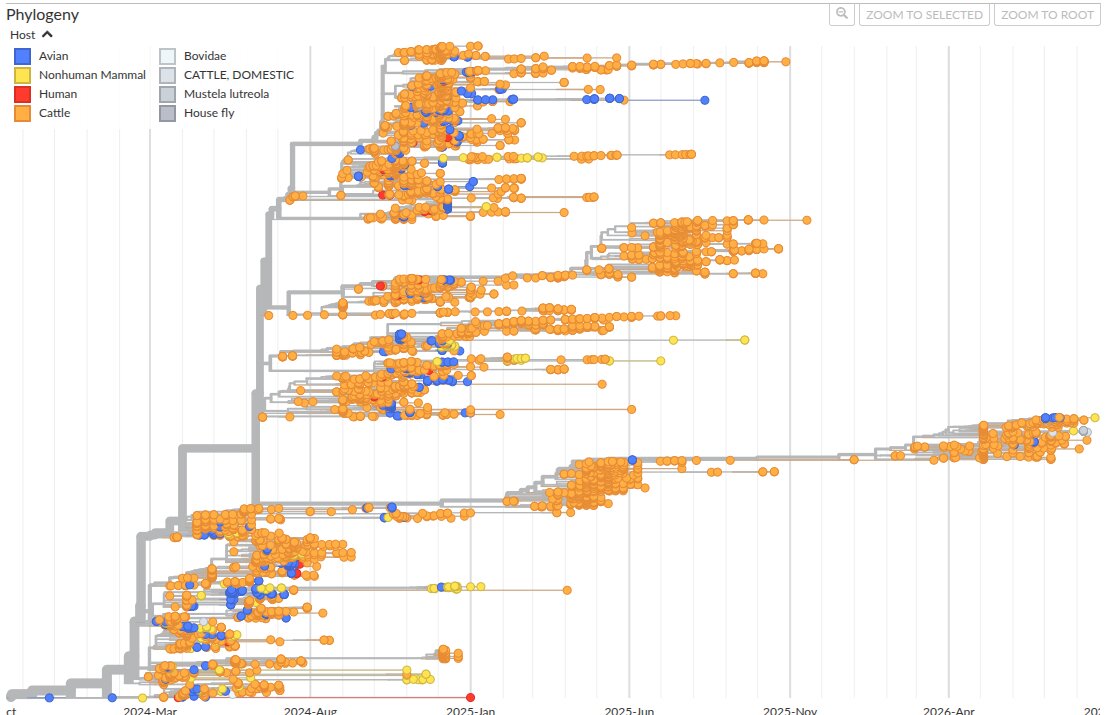
Open-source tracking of how pathogens evolve and spread, rebuilt from shared genome sequences as they arrive; live views of H5N1 bird flu, measles, mpox, Ebola, SARS-CoV-2 and many more.
People & societyLiving systems open sourceopen dataopen participation
-
Open-source simulator from CAMEL-AI of social media platforms like X and Reddit, populated by up to a million language-model users who post, follow and repost under a recommendation algorithm.
People & society open sourceopen dataopen participation
-
An experiment by Anselm Hook in which a machine reads the news, finds the things each story is about and grows a vocabulary of kinds and parts from the text, with the things mapped over time.
People & society open sourceopen participation
-
Open-source agent-based model of COVID-19 from the University of Oxford's Big Data Institute, with IBM UK and Faculty; simulates infection through household, workplace and random contacts and tests lockdowns, vaccination and manual and app-based contact tracing.
People & society open sourceopen dataAPIopen participation

Part of Google Earth AI; given a user's local outcome data such as disease rates or crop yields, it picks relevant population and satellite signals and trains models for spatial prediction, downscaling and forecasting.
People & societyFood & land closed sourceAPI
-
Google Research geospatial foundation model that computes an embedding vector per postal code or county from aggregated search trends, place busyness, maps, weather and air quality, for predicting local health, economic and environmental indicators.
People & societyCities & places partly open sourcepartly open data
-
Open-source population synthesiser in the ActivitySim family that builds household and person tables for a region from a census sample and local control totals, as input to travel models.
People & societyMovement & logistics open sourceopen participation
-
Open-source Python library that translates system dynamics models from Vensim or Stella (via XMILE files) into Python, to run and fit them with Python's data tools.
People & society open sourceopen dataAPIopen participation
-
Open-source C++ toolkit in Argonne's Repast Suite for agent-based models split across the processors of a cluster or supercomputer; Simphony (Java) and Repast4Py (Python) are its siblings.
People & society open sourceopen dataAPIopen participation
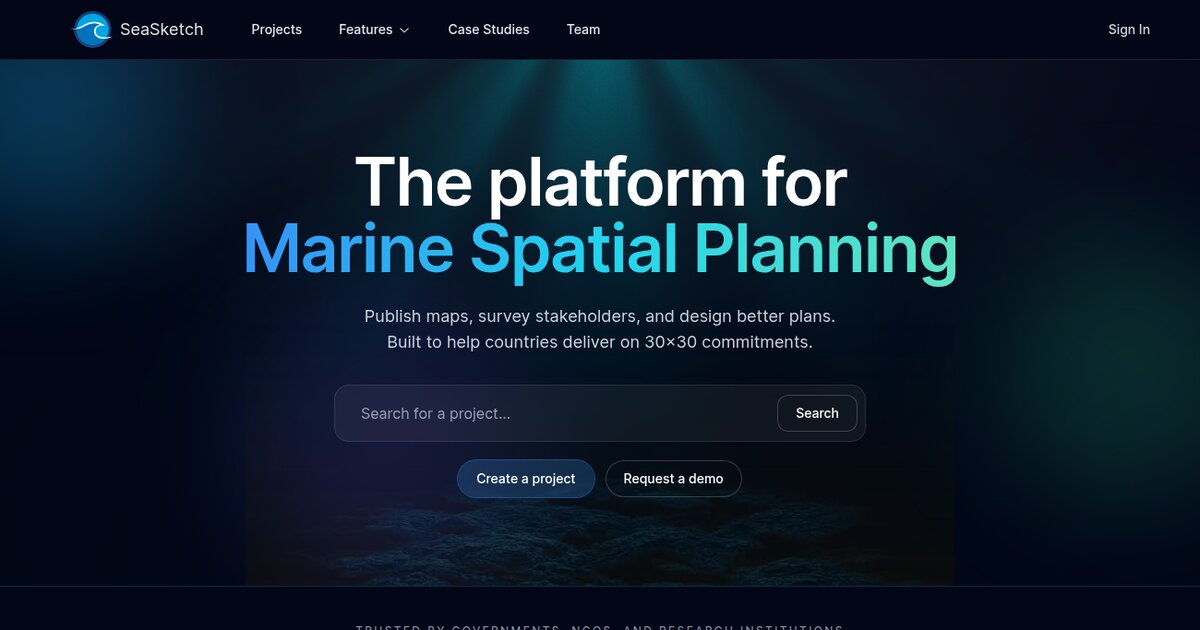
Open-source web software for planning the use of the sea with the people who use it: shared maps, map surveys, and zones anyone can draw and have measured. From a lab at UC Santa Barbara.
WaterPeople & society open sourceAPIopen participation
-
Company founded by the Stanford researchers behind generative agents that sells simulations of how customers, employees or populations would respond to a change, from models it says are trained on data about real people.
People & society closed sourceclosed data
-
R package by Matthias Templ and colleagues that simulates a full synthetic population from a survey sample and census totals, developed with support from the World Bank and the IHSN.
People & society open sourceopen participation
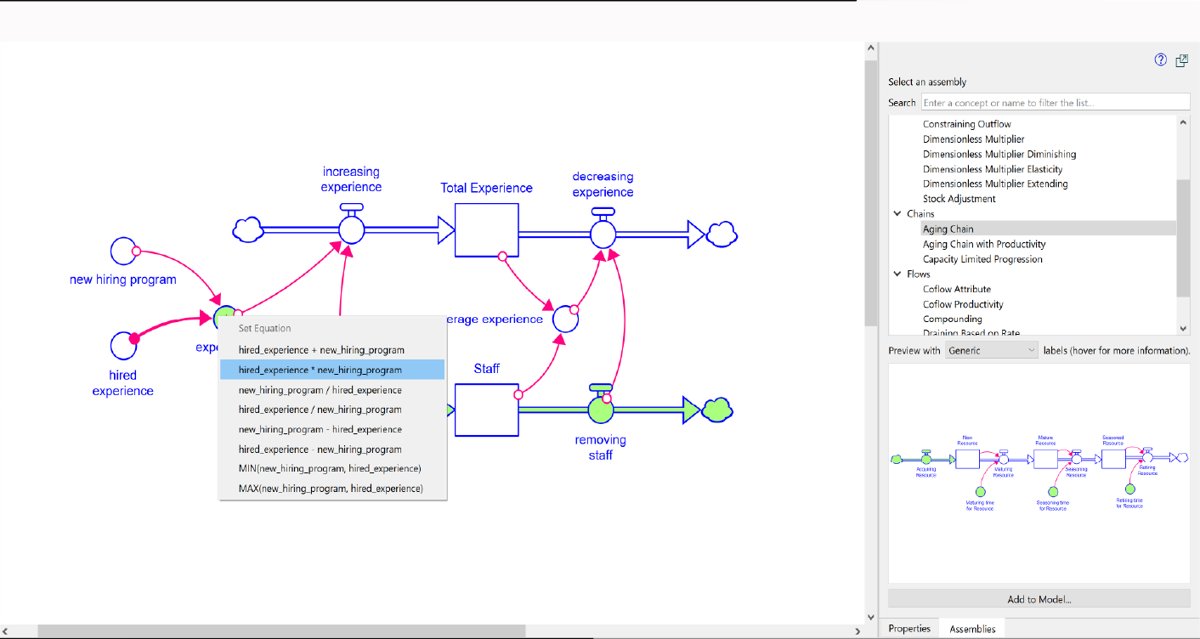
System dynamics software from isee systems for building stock-and-flow models and publishing them as interactive simulations on the web, the desktop or mobile devices.
People & society closed source
-
Open tool from The Alan Turing Institute that assembles a synthetic population of Great Britain for a chosen area, with each person's household, health, pay, daily activities and the venues they visit, in one file, with ready-made downloads by county.
People & societyCities & places open sourceopen dataopen participation
-
R package, written at the University of Edinburgh for the UK longitudinal studies, that makes synthetic copies of confidential individual-level data so the copy can be shared and analysed in place of the original.
People & society open sourceopen participation
-
Steve Coy's simulation framework for decision-making: composable causal models of a system, run faster than real time to predict the consequences of possible courses of action.
People & society closed sourcepartly open participation
-
Experimental Python library from Microsoft that simulates people with set personalities, beliefs and jobs using a language model, for simulated focus groups, interviews and market surveys.
People & society open sourceopen participation
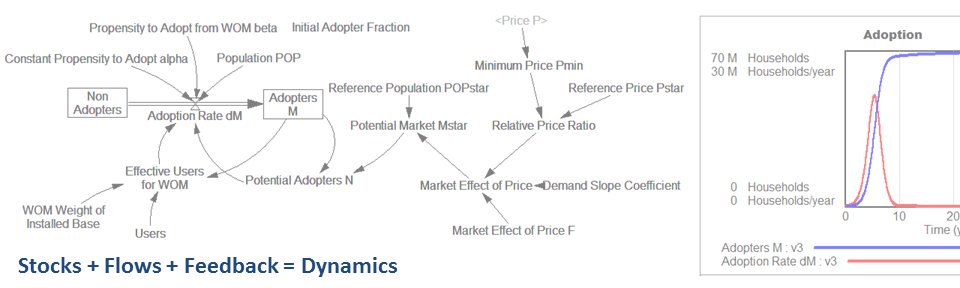
Desktop software from Ventana Systems for building, calibrating and sharing system dynamics models of stocks, flows and feedback; free for education, with paid editions for other work.
People & society closed sourceAPI
-
Role-playing game of UN climate negotiations from Climate Interactive, MIT Sloan and UMass Lowell, in which delegates' pledges are tested live in the C-ROADS climate model.
Weather & climatePeople & society open participation
data sources
-
Knowledge graph of urban climate adaptation plans from the Urban Tech Hub at Cornell Tech; AI agents read city plans and extract actions, hazards, outcomes and costs, each traced to its source sentence.
Cities & placesWeather & climatePeople & society partly open sourcepartly open dataAPI

-
Cornell Lab of Ornithology project in which birders submit complete checklists; the records, and weekly abundance maps modelled from them, are free for research and education.
Living systemsPeople & society partly open dataAPIopen participation
-
Global input-output database linking 44 countries and five world regions through trade, with each industry's emissions, materials, water, land and jobs, yearly from 1995; free for non-commercial use.
People & societyWeather & climate partly open data
-
Free database built by machine-reading the world's news in over 100 languages: events since 1979, the people, places, themes and tone in each article, and search and map APIs.
People & society open dataAPInone participation
-
Purdue University's database of production, consumption and trade for 145 countries and 18 regions, built for economy-wide models of trade policy; the current release is sold, older ones are free.
People & societyFood & land partly open dataopen participation

Community website and app where people photograph plants, animals and fungi and others identify them; the observations are published as open biodiversity data for research and conservation.
Living systemsPeople & society open dataopen participation

The Integrated Food Security Phase Classification: a shared five-phase scale, from Minimal to Famine, with country analyses mapped area by area
Food & landPeople & societyCities & places open dataAPI unknownpartly open participation
-
Map of what local zoning allows across the United States, district by district, built by the nonprofit Land Use Atlas from the text and maps of each zoning code
Cities & placesPeople & society closed sourceclosed datano APIpartly open participation
-
NVIDIA's open collection of synthetic adult personas, one dataset per country, each sampled to match that country's census statistics and then written out as short text profiles by a language model.
People & society partly open sourceopen data
-
Website by Datawheel, begun at MIT, that charts what each country trades with whom, product by product, and ranks economies by complexity; historical data free, recent data paid.
People & society partly open dataAPI
-
Stockholm Resilience Centre's catalogue of documented regime shifts in social-ecological systems, each with its drivers, feedbacks, impacts and management options
Living systemsPeople & societyCities & places open sourcepartly open datano APIopen participation
-
Gridded population, settlement, air-quality and vulnerability data from NASA's former data centre at Columbia University; since 2025 a closed archive of 350-plus datasets in Earthdata.
People & societyCities & places open dataAPIclosed participation
-
Open dataset of synthetic individuals and households for every dissemination area in Canada, for 2016 and for 2021, 2023 and 2030 under nine growth scenarios
People & society open sourceopen data
-
The UN Statistics Division's database of official imports and exports of goods and services, by product and partner, reported by nearly 200 countries since 1962; free with registration.
People & society partly open dataAPI
-
The UN's estimates of each country's population by age and sex since 1950, with projections to 2100 under several scenarios; free to download, revised every two or three years.
People & society API
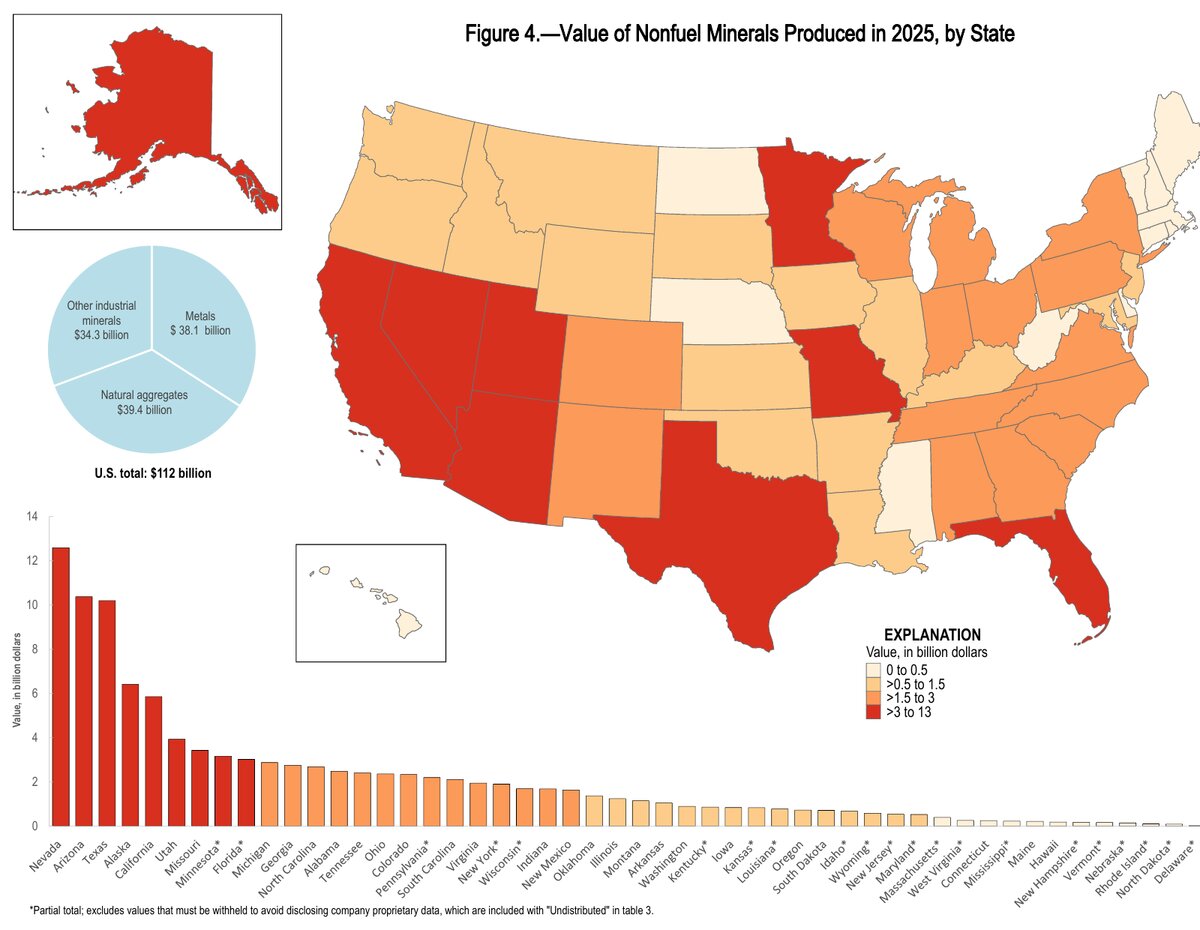
The US Geological Survey's yearly report on more than 90 nonfuel minerals: US production, trade and import reliance, and world production and reserves, with free CSV tables.
People & society open data
A hosted service that rates the walkability of any address from 0 to 100 from the walking distance to nearby amenities and from street measures; its companions Transit Score and Bike Score rate public transport and cycling. Scores are served through a widget and an API.
Movement & logisticsPeople & society closed sourceclosed dataAPIpartly open participation
-
University of Southampton group that estimates how many people live in each 100 m or 1 km grid cell, for every country and year from 2015 to 2030, published under CC BY 4.0.
People & society open dataAPI
books
A practical primer from Crooks, Malleson, Manley and Heppenstall, 2019, on building agent-based models of people in places and linking them to GIS, with worked examples in NetLogo.
Edited volume from Heppenstall, Crooks, See and Batty, 2012, collecting the foundations, methods and applications of agent-based modelling of geographic systems.
-
A 1978 collection edited by Clement Bezold, introduced by Alvin Toffler, on 1970s experiments that put forecasts and alternative futures before citizens, legislatures and city and state governments.

Wendell Bell's two-volume account of futures studies as a field: its history, purposes, assumptions, theory of knowledge, methods and values, written partly as a basic text for courses.

Alvin Toffler's 1970 bestseller on the stress of too much change in too short a time, which ends by proposing "anticipatory democracy": public forecasting joined to citizen assemblies.
-
Epstein and Axtell's 1996 Sugarscape experiments, which showed how migration, inequality, trade and conflict can grow from simple agents on a landscape; the founding book of agent-based social simulation.
-
Reference work in 77 entries on anticipation, the use of the future in decisions, drawing on biology, the social sciences, the humanities, engineering and computer science; Springer, 2019.
James C. Scott's 1998 study of why large schemes to reorder nature and society from above have failed, and of the local knowledge their simplified maps leave out.
-
Bertrand de Jouvenel's 1964 book (English 1967) arguing that the future cannot be known, only conjectured as a range of possible futures, "futuribles", to be discussed openly and continuously.
-
The 1972 Club of Rome report by Meadows, Meadows, Randers and Behrens that used the World3 system-dynamics model to ask whether exponential growth in population and industry could continue on a finite planet.
Michael Batty's 2013 argument that cities are flows and networks rather than fixed artefacts, with the models that follow from treating them that way.
Ben Green's 2019 argument that cities should use technology as a tool for democratic and equitable ends rather than treat it as the goal, with cases of smart-city projects gone wrong and alternatives.
-
Jay Forrester's 1969 system-dynamics model of a city as feedback loops among population, housing and industry, the first computer model to simulate a whole city's life cycle.

Jay Forrester's 1971 system-dynamics model of the world as one system of population, capital, food, resources and pollution; the model behind The Limits to Growth.
scenarios
-
Villages in Alwar district, Rajasthan, rebuilt earthen rainwater dams from 1985 and saw dry wells and the Arvari River flow again, yet the district as a whole still pumps about 1.8 times the groundwater it can safely draw each year. Which choices by villages and the state would move the water table?
-
Bali's rice terraces are watered by about 1,200 farmer collectives coordinated through water temples, a World Heritage landscape since 2012. Rice fields shrank from 70,996 to 64,474 hectares between 2019 and 2024 as land goes to hotels and housing. What keeps the system working?
WaterFood & landCities & placesPeople & societyLiving systems
-
The Philippines has backed bamboo since 2010 for reforestation, school furniture and farm income, and Mindanao is now its designated bamboo hub. Growers in Bukidnon must choose which bamboo to plant, where, and when to cut it, as engineered timber, plastic substitutes and carbon credits change what a culm is worth.
Living systemsWaterWeather & climateFood & landPeople & society
-
Bangladesh grows about 7% of the world's rice and imports much of its fertiliser through the Strait of Hormuz. If trade through the strait stays disrupted, how much of next year's crop is at risk, and who else feels it?

A 2026 study projects that fire will destroy nearly three times as many US buildings a year by mid-century if nothing changes. Which changes, and where, would bend that curve?
-
California's 2014 groundwater law gives the valley's most overdrafted basins until 2040 to stop drawing down their aquifers. Two are now on state probation, wells keep going dry and the land is still sinking. Which fields go dry, and who pays?
-
A small town in south-eastern Colorado lost its whole government while its water tank failed and residents boiled their water for months. The county now owns the system. Who should run it, and what will it cost?
-
Private land bought and restored by Kristine and Doug Tompkins was given to Argentina on condition it stay protected for at least 99 years, making or enlarging six national parks. Jaguars are back in the Iberá wetlands, next to cattle country. What happens next?
-
Fires in Sumatra and Kalimantan, many of them set to clear land, spread through drained peat in dry El Niño years and send haze across Southeast Asia. 2026 is another such year. Which peat, rewetted or protected, would cut the smoke the most?
-
A tidal lagoon in the middle of Oakland, opened wider to San Francisco Bay in 2013, still runs short of oxygen in late summer and winter, and a Bay algal bloom killed thousands of its fish in 2022. Which mix of tide gate operation, aeration and other measures keeps its fish alive?
-
The Middle East and North Africa have warmed about 1.5°C since pre-industrial times, some parts three times as fast as the world. Gulf states stop outdoor work at midday each summer on fixed dates and hours. Do those windows still match the heat, and will they later?
-
A Supreme Court settlement gives New Mexico until May 2036 to pump 18,200 acre-feet a year less groundwater along the Lower Rio Grande, and the state hopes to do it by buying farmers' water rights. Who gives up water, and is it enough?
-
A flesh-eating fly larva eradicated from the United States in 1966 moved north through Central America and Mexico and was found in calves in Zavala County, Texas, in June 2026. Can sterile flies push it back again?
-
Grand Coulee and Chief Joseph dams were built without fish passage and have kept salmon out of the upper Columbia since the 1940s. Tribes on both sides of the border are now releasing salmon above them to test whether runs can come back, and what passage would have to be built.

With Hormuz closed, Saudi Arabia moved its oil exports to the Red Sea, and in September 2026 the Houthis seized islands and a port near the Bab el-Mandab strait. Which routes are left for Saudi crude to reach Asia?
-
Since the war with Iran began on 28 February 2026, traffic through the strait that carries about a fifth of the world's oil has fallen to a fraction of normal. Who gets through, how much oil reaches market, and what happens when it reopens?
-
Since March 2026 foreign-flagged tankers may carry fuel between US ports, a trade the Jones Act normally reserves for US-built, US-crewed ships. How much fuel has it moved, and has it changed prices?
-
The rules for sharing the Colorado River's shortages expired with 2026, and the seven basin states could not agree on new ones. The federal government imposed two-year rules instead, with Lake Powell and Lake Mead at record lows and two states suing. How should the cuts be shared?
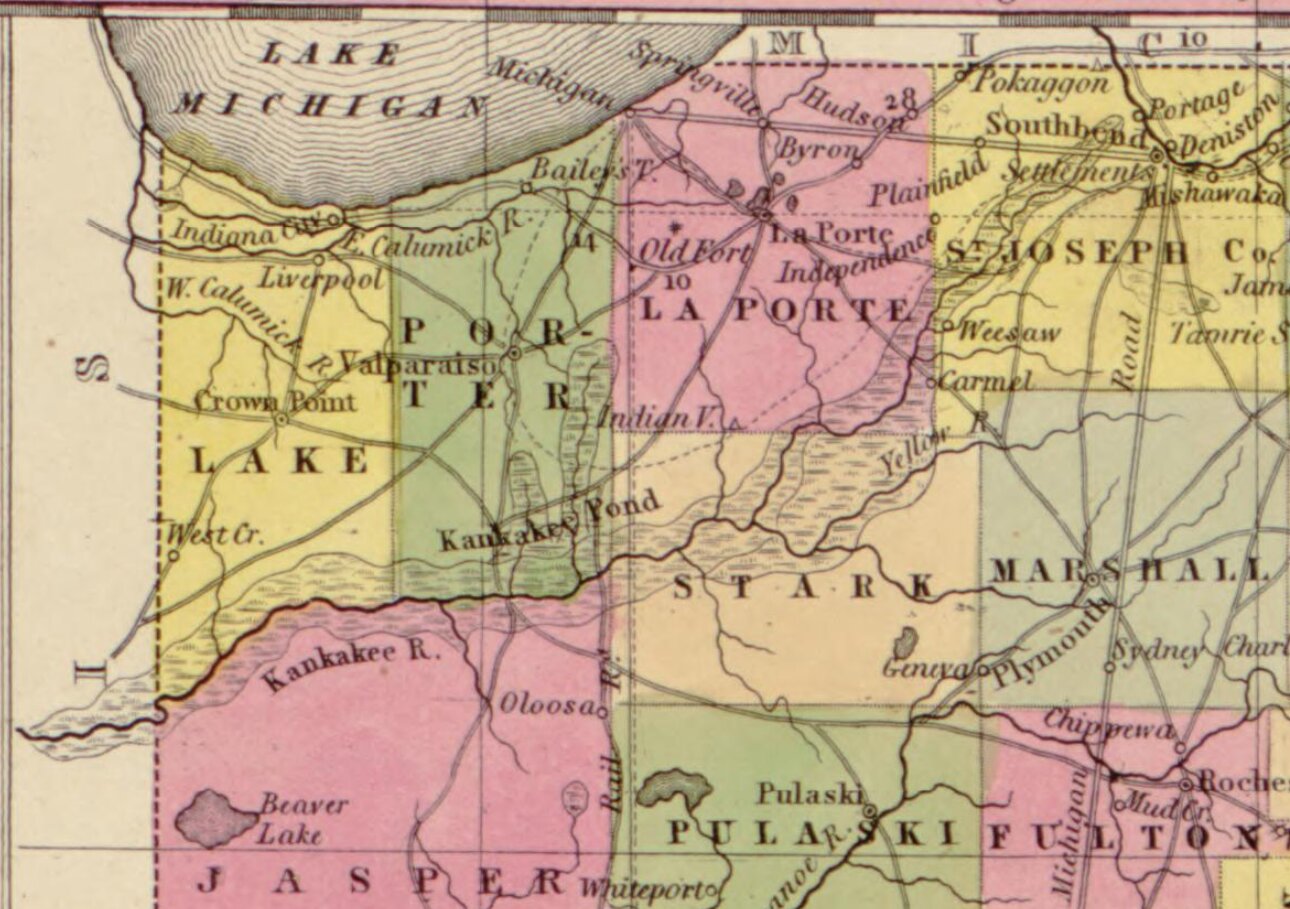
A vast Indiana marsh full of ducks, geese, cranes and herons was drained for farms by 1918, and its nesting birds thinned out or left. What would putting water back do for birds and floods?
WaterFood & landLiving systemsCities & placesPeople & society
-
The Great Lakes hold about a fifth of the world's surface fresh water, but by Earth.com's account less than 1% of it is replaced each year, while the climate around them warms and their ice shrinks. How much can be drawn and diverted safely?
-
California's Delta feeds the pumps that send water across the state, holds a delta smelt whose index in the state's autumn survey has been zero since 2018, and sits behind 1,100 miles of aging levees with islands sunk below sea level. In 2025 and 2026 the federal pumping rules, the state's flow rules and a 45-mile tunnel were all being decided at once.
WaterLiving systemsFood & landPeople & societyCities & placesWeather & climate
-
A stagnant lagoon left by gravel mining in the Willamette River breeds cyanobacteria blooms that close the river to swimmers and pets. Researchers propose cutting channels to flush it. Which design, and who pays?
-
Tuvalu's islands average barely two metres above the sea. Its groundwater is turning salty, new raised land has been built on the capital islet, and since 2025 up to 280 Tuvaluans a year can move to Australia. How much land, water and food will hold those who stay?
WaterCities & placesPeople & societyFood & landLiving systemsWeather & climate
-
The United States imports most of its aluminium and taxes it at 50%, while building a new smelter takes years. What does that do to the price American manufacturers pay, and can domestic smelting come back?
-
Wolves returned to Yellowstone National Park in 1995, and the park held 84 of them at the end of 2025. Inside the park they are protected; across the boundary they are hunted under state rules. How many can be taken next to the park, what do wolves cost ranchers, and how much did they change elk, willows and streams?
terms
-
The idea that a bioregion should be organised around the relationships that sustain life in a place, such as a shared water system, rather than around a boundary drawn on a map; argued by Indy Johar and related to the rights-of-nature movement for rivers.
-
The aim of predictive models of land, water, law and policy that ordinary people can run, question and argue with, open to the public and not reserved for planners, companies and agencies.
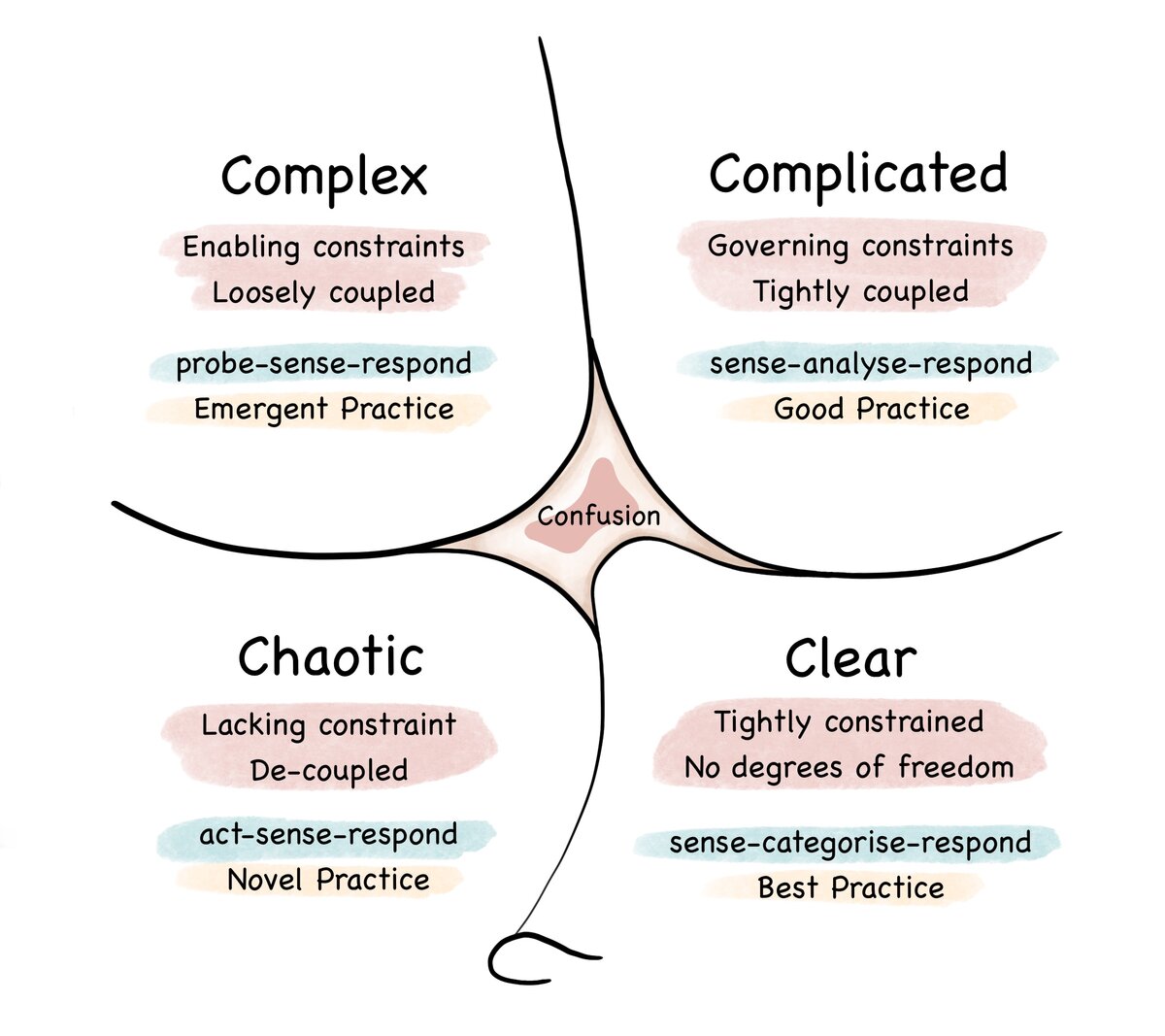
Dave Snowden's framework of five domains (clear, complicated, complex, chaotic and confused), each with its own mode of action and its own limits on prediction.
-
Patient twins in medicine, language-model agents built from interviews with single people, and simulated populations built from the census or from language models.
-
The study of possible futures in order to act now, also called futures studies or strategic foresight: where it is taught, its roots in anticipatory democracy, and why it avoids the word predict.
-
Two words for the world's crises taken together: what each means, who uses them, and the few places they touch the modelling of places.
-
Blue Green Future's accounting framework that counts living ecosystems as productive infrastructure in GDP and on sovereign balance sheets.
-
A made-up set of households and people for a place, built so that its totals and mixes match the census, letting a model hold everyone without holding anyone's real records.
-
A proposed social-science counterpart to Earth System Science, set out in The Anthropocene Crisis (Cambridge University Press), edited by Mathias Albert and Barry Buzan.
everydays

Whether daily trips from one address can be made on foot, by bike or by transit, from nearby destinations, connected streets and frequent service.
-
How hot one street or house gets in summer turns on the regional climate, nearby shade and paving, humidity and the changing count of very hot days.
-
How much tree canopy covers one street or block, how much it cools the air on a summer day, and what planting or losing trees would change for its residents.
Weather & climateLiving systemsPeople & societyCities & places
organizations
A not-for-profit community interest company in England and Wales that makes maps, 3D representations and installations from environmental data for partners such as councils, architects and research groups.
-
Open library where researchers publish the code and documentation of agent-based models of people and ecosystems; models that pass its peer review get a citable DOI.
People & societyLiving systems open sourceopen dataopen participation
-
A research network of social scientists studying the rules and institutions that steer how societies respond to environmental change; it keeps a directory of governance datasets.

A partnership of Commonland, Ashoka, The Weaving Lab and Wire Group, formed in March 2025, prototyping Bioregional Financing Facilities in three European bioregions.
Nonprofit centre in Santa Fe, New Mexico, founded in 1984 to study complex systems; its free Complexity Explorer courses teach agent-based modelling and scaling.
digital twins
-
A Maine non-profit and a UK visualisation firm are gathering data on the Casco Bay bioregion into a 3D interface meant to prompt stewardship. It names no simulation or forecast.
Cities & placesLiving systemsPeople & society partly open participation
A sustainability simulator of the island of Moorea, French Polynesia, and its lagoon, led by the IDEA Consortium from the University of California's Gump South Pacific Research Station.
-
Tuvalu's government project to scan, map and archive the whole country, so that it can plan for sea level rise now and keep its land, culture and state in digital form.
questions
-
How will people move through a crowded place, and how long would it take to clear an area in an emergency?
-
Who lives here, what would a change do to their days, and how would they react to it, before anyone tries it on the real place?
-
What happens when several proposals or policies are combined, and how can a group explore the trade-offs?
stories
-
Playable post by Vi Hart and Nicky Case, 2014, built on Thomas Schelling's segregation model, in which readers move shapes, set their bias and watch a mixed neighbourhood sort itself apart.
People & societyCities & places open sourceno APIopen participation
-
Financial Times game from 2022 in which the reader, as global minister for future generations, makes three rounds of choices to 2050 and sees the warming their path leads to.
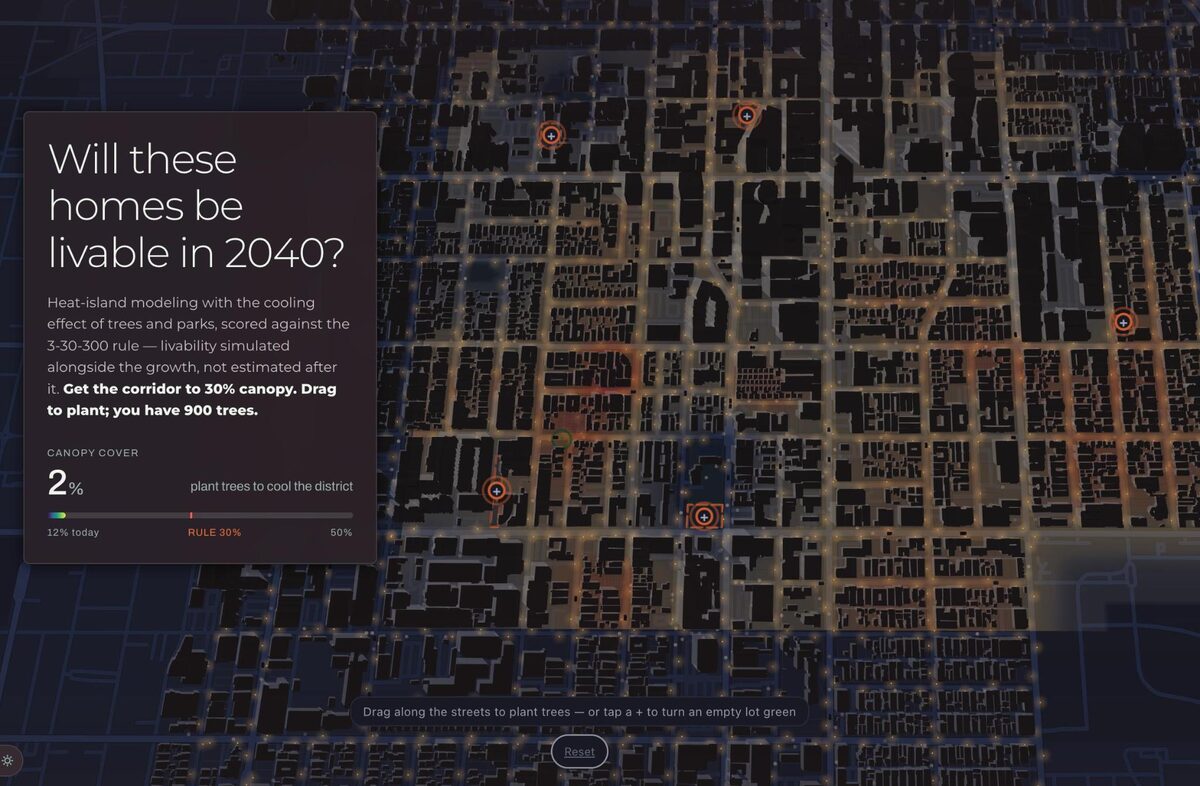
Urbanly's home page: five screens, each a planning question with a target, where the reader drags schools, stops, jobs and trees to meet it.
Cities & placesPeople & society closed sourceopen participation
-
Scrolling story and playable water-allocation model of the Colorado River basin by Anselm Hook, in which readers set the flow, choose the cut rule, retire irrigation and share the result as a link.
-
New York Times Upshot interactive, 2015, by Gregor Aisch, Amanda Cox and Kevin Quealy, in which readers draw their guess of a relationship before the chart reveals the data.
events
-
Scenario session at the Public Vitality Camp Berlin 2026, moderated by Dark Matter Labs, BiberAmt Berlin and nextlearning e.V., on governing the Berlin–Brandenburg water system across jurisdictions using measures from Berlin's Masterplan Wasser.
video channels
-
Public lectures and seminars from the Santa Fe Institute on complex systems; filtered here for simulation, agent-based and scenario talks.
Symbol: "Meeting" by Creative Stall, Noun Project, CC BY 3.0.